‘One bad night won’t ruin you’ – Anna West on the most important night of a career
What you'll learn in this story
- Why many pros sleep worse before the most important match of the season.
- Why one bad night doesn't have to ruin your next day.
- The morning routine Anna West recommends after short nights.
- What's behind her concept of 'Energy Givers' and 'Energy Suckers'.
Why pros sleep badly before a World Cup match – and why that’s exactly as it should be. Is four hours' sleep enough? Anna’s radical shift from sleep output to morning routine.
It’s 6.30 am, the morning before the first World Cup match. A young player comes to breakfast, dark circles under his eyes, half in despair. Four hours’ sleep, maybe. He tells Anna everything at once: the bed too hard, his head too full, the tossing and turning, the lying awake, the hoping.
Anna West listens. Then she laughs and says one sentence that changes the whole day.
‘Perfect. That’s exactly what we’d expect.’

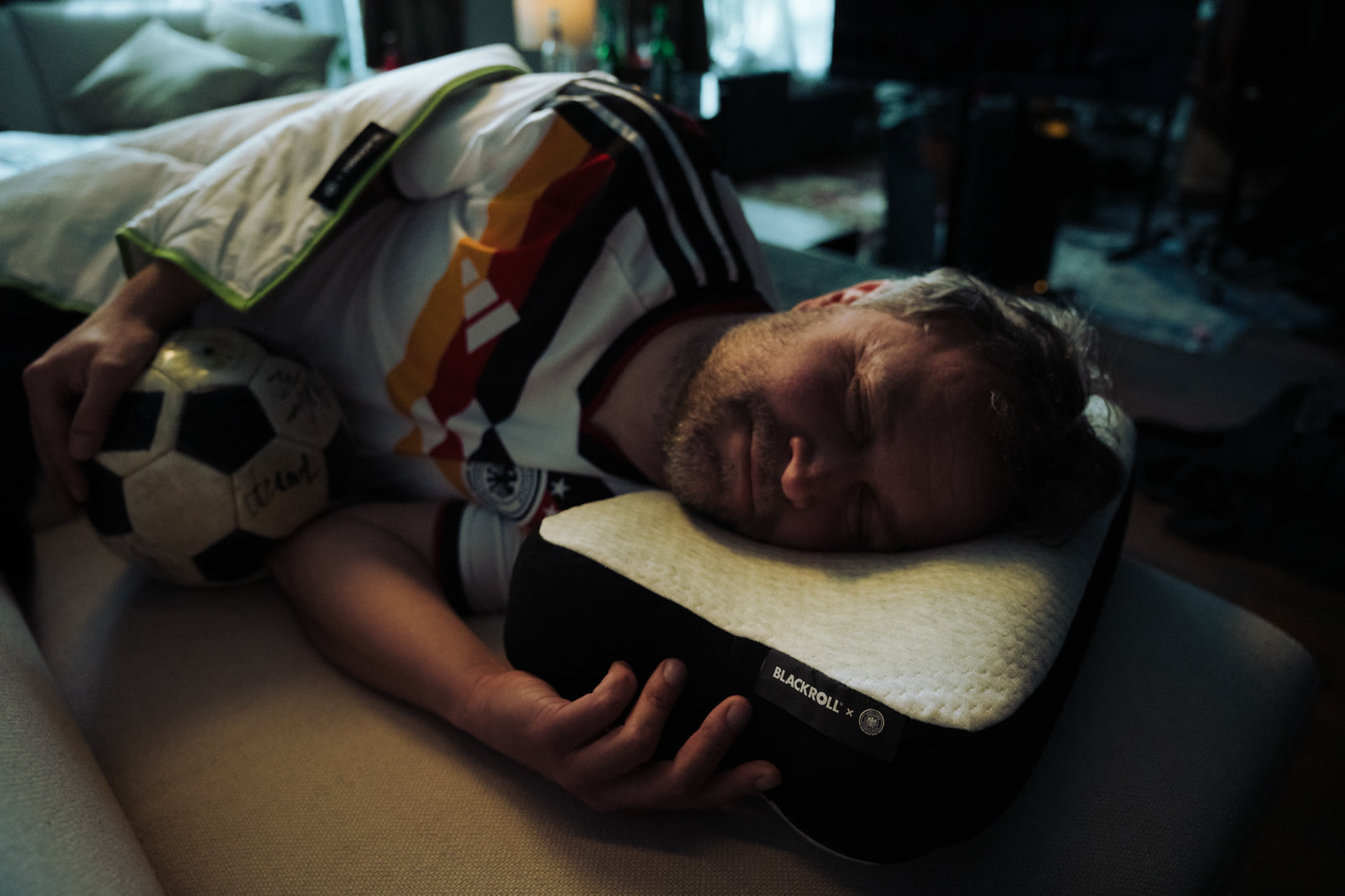
Why a bad night before the game is almost normal
Anna has worked with elite athletes for years. She knows: before big matches, most people sleep badly. Cortisol rises, adrenaline runs high, the mind races at 1,500 revs. That’s not an emergency – it’s biology. And this is exactly where Anna’s method comes in.
‘One bad night won’t ruin you. Before a big event it’s almost to be expected – because your body produces hormones that work against sleep. Once you understand that, you’re already halfway there.’
What Anna does with her players turns the whole logic on its head. No longer: ‘How do we maximise sleep the night before?’ Instead: ‘How do we build the morning routine so that even a four-hour night works?’

The wrong response
Most athletes make the same mistake the day after a bad night. They stay in bed. They put off breakfast. They don’t go outside. They talk to everyone about how tired they are.
‘That’s the wrong response. It amplifies everything’, Anna says.
Here’s what happens: no daylight means no circadian reset. No breakfast means no metabolic trigger. No water means deeper tiredness. And every ‘honestly, I slept so badly’ at the breakfast table prompts the brain to feel it too.
The right response: Anna's morning routine
Anna’s morning-after routine follows a clear order.
- Light. Open the curtains and, ideally, step outside for a few minutes.
- Water. Straight away, before anything else. Ideally with electrolytes.
- Caffeine. Deliberately – but never on an empty stomach.
‘Never caffeine on an empty stomach. You get the energy. And then the crash right after. You don’t want that on match day.’
Between the water and the caffeine sits a light breakfast. Carbohydrates for energy, protein for satiety, a pinch of salt for hydration. No miracle cure. But three levers that together make the difference.
Energy-givers and energy-drainers
Anna’s favourite framework, one she’ll lean on all the more for the 2026 World Cup. It’s practical and romantic at the same time.
‘Ask yourself who’s allowed to call you on the morning of a match. Who gives you energy? Who takes it? Ring the first one. Let the second one call this afternoon.’
Family. Best friend. Coach. For every player a different picture. But the principle is universal: a few minutes’ contact with someone who lifts you up is worth more, biochemically, than an extra cup of coffee.
And this doesn’t just apply to pros. Whether you’re giving a pitch on Sunday, sitting an exam or starting a triathlon – the question ‘Who gives me energy?’ works.
The verbal strategy
An observation of Anna’s that sounds counter-intuitive but proves itself with teams again and again: don’t talk about tiredness.
‘The more we name the sore point, the more strongly we feel it. There’s a verbal strategy – within the coaching staff too. On match day we don’t talk about tiredness. We talk about readiness.’
Sounds trivial. In practice it makes a measurable difference. Whoever says at the breakfast table, ‘today I feel great’, tends to feel it. Whoever says, ‘ugh, what a rotten night’, loads that feeling onto the day.
Seven sockets: the 7 types of rest
Anna has a model she’s had her players work with for a few years now. Seven kinds of rest.
‘We’re not iPhones. We can’t keep using the same socket and expect the battery to fill up. Sometimes we need different plugs.’
Sleep is only one of seven. The others: physical rest (stretching, walking), mental rest (micro-breaks, silence), emotional rest (a conversation with someone you trust), sensory rest (screens off), creative rest (nature, music, working with your hands), social rest (time with energy-givers), spiritual rest (meaning, anchors, reflection).
If you notice on the morning of a match that the ‘sleep’ socket is empty, you can plug into the others.
Smart, or smart about it
Anna closes every one of her coaching sessions with the same line. It’s more an attitude than a rule.
‘We want them to do the smart thing. But if they forget the smart thing, they need to be smart about it.’
That fits the player after four hours’ sleep. It fits the fan who has to be at the office at 5 am because the World Cup match didn’t finish until 2.30 am. It fits anyone facing the most important day of their week and thinking: ‘If only I’d slept better.’
You could have. But you didn’t. And the first 30 minutes after waking decide how the day goes – not the hour of sleep you missed.
Anna’s complete method – including the 7 types of rest, sleep latency and more – in the full interview with Anna West.